
Foundations Insulated for Year-Round Heat Retention
Basement insulation in Toponas for homes losing heat through foundation walls during mountain winters
Basements lose heat year-round in Colorado mountain climate, with uninsulated concrete walls conducting thermal energy directly into surrounding soil and the rim joist junction creating an air leakage path that compromises the entire thermal envelope. Sprayfoam Solutions LLC insulates basement walls and rim joists to eliminate heating season energy loss, applying closed-cell spray foam to interior or exterior basement wall surfaces to create a continuous thermal layer from rim to slab. Winterization from rim to slab demands attention because high-altitude performance requirements exceed standard construction practice, and seasonal temperature swing infiltration at the foundation level drives energy loss throughout the entire home.
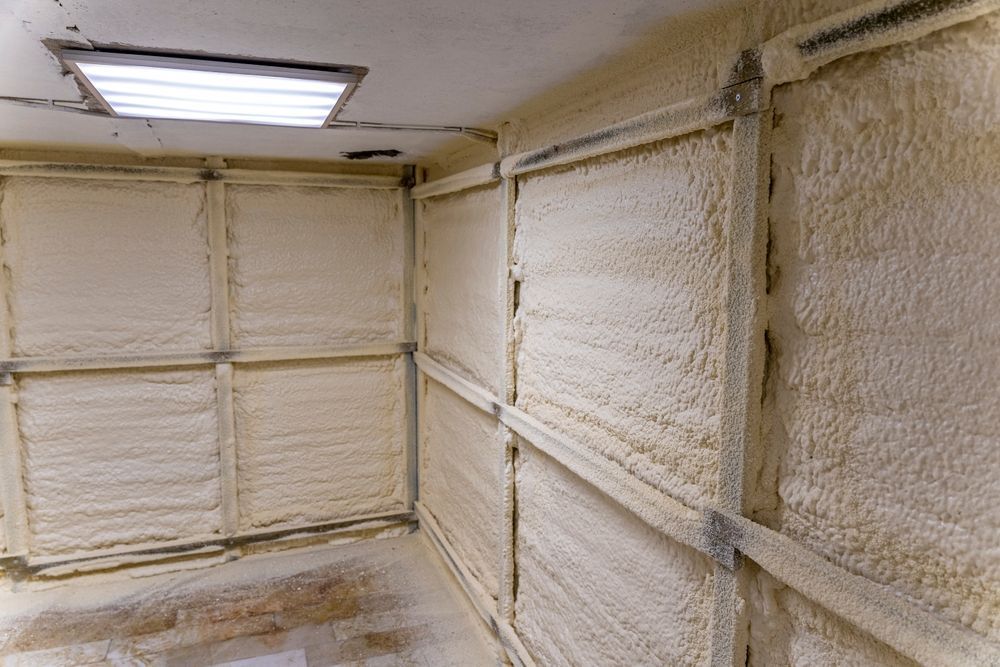
Installation involves applying closed-cell spray foam directly to the interior face of basement walls, creating an insulating and air barrier layer that stops both conductive heat transfer through concrete and convective air movement at the rim joist junction where framing meets foundation. The foam application seals the rim joist cavity simultaneously, eliminating the gap where wood framing sits on the concrete foundation wall and creating thermal continuity between below-grade insulation and the above-grade building envelope.
Schedule a property evaluation to identify specific foundation insulation needs and moisture conditions.
Why Basement Insulation Works for Mountain Homes
A continuous thermal layer applied to basement walls addresses the reality that concrete conducts heat readily, and uninsulated foundation walls remain cold enough during winter to chill adjacent living spaces and create convective air currents that pull warm air downward from upper floors. Sealing the rim joist junction as part of basement insulation work eliminates seasonal temperature swing infiltration that occurs as wood framing expands and contracts against concrete, opening and closing gaps that allow air movement even when initial construction included sill sealer or caulk applications.
After basement insulation is completed, basement spaces feel noticeably warmer and less damp, concrete walls no longer feel cold to the touch even during prolonged winter cold snaps, and upper-floor heating performance improves as the convective loop pulling warm air downward through the home is interrupted. Heating system runtime decreases because the thermal envelope now extends to the foundation level rather than stopping at the basement ceiling, reducing total building heat loss and allowing the system to maintain temperature with less frequent cycling.
The insulation approach varies depending on whether application occurs on interior or exterior wall surfaces, with interior application being more common in retrofit situations where exterior excavation is impractical or cost-prohibitive. Exterior application offers advantages in new construction by keeping the concrete wall within the thermal envelope and avoiding interior space loss, though either approach delivers comparable thermal performance if executed with attention to moisture management and thermal bridge elimination at the rim joist transition.
What Property Owners Usually Ask
Homeowners in Avon, Eagle, and Vail Valley addressing foundation weatherization often want to understand how basement insulation performs under the specific conditions their properties face.
What insulation type works best for basement walls in mountain climates?
Closed-cell spray foam provides both insulation and moisture resistance in a single application, which matters in below-grade installations where concrete walls can transmit water vapor from surrounding soil and where thermal bridging through foundation materials drives condensation risk during shoulder seasons.
How does basement insulation affect indoor air quality?
Insulating basement walls reduces the cold surface area that drives condensation and damp conditions, lowering the moisture levels that support mold growth and musty odors, though mechanical ventilation or dehumidification may still be needed if bulk water infiltration occurs through foundation cracks or poor exterior drainage.
When should basement insulation be installed during a home energy retrofit?
Basement insulation should be prioritized early in weatherization work, particularly if blower-door testing reveals significant air leakage at the rim joist level, since sealing the foundation reduces total building heat loss and prevents conditioned air from escaping through lower-level gaps.
Why does rim joist sealing matter as part of basement insulation?
The rim joist junction creates a continuous air leakage path around the entire building perimeter, and failing to seal it when insulating basement walls leaves the most significant thermal bridge and infiltration point unaddressed, which undermines the performance investment made in wall insulation.
What moisture precautions are necessary before insulating a basement in Toponas?
Active water infiltration through foundation cracks, hydrostatic pressure against walls, or inadequate exterior drainage must be corrected before insulation installation, since trapping moisture behind a vapor-impermeable layer like closed-cell foam will lead to concealed water accumulation and potential structural damage over time.
Sprayfoam Solutions LLC evaluates foundation conditions and insulation strategy for homes throughout the I-70 corridor communities, ensuring that moisture management and thermal performance integrate properly. Contact the office to discuss your basement insulation approach and coordinate with any necessary drainage or waterproofing work.