
Air Sealing With Seasonal Vapor Permeability
Open Cell Spray Foam in Toponas for Attic and Interior Cavity Applications With Moisture Transfer
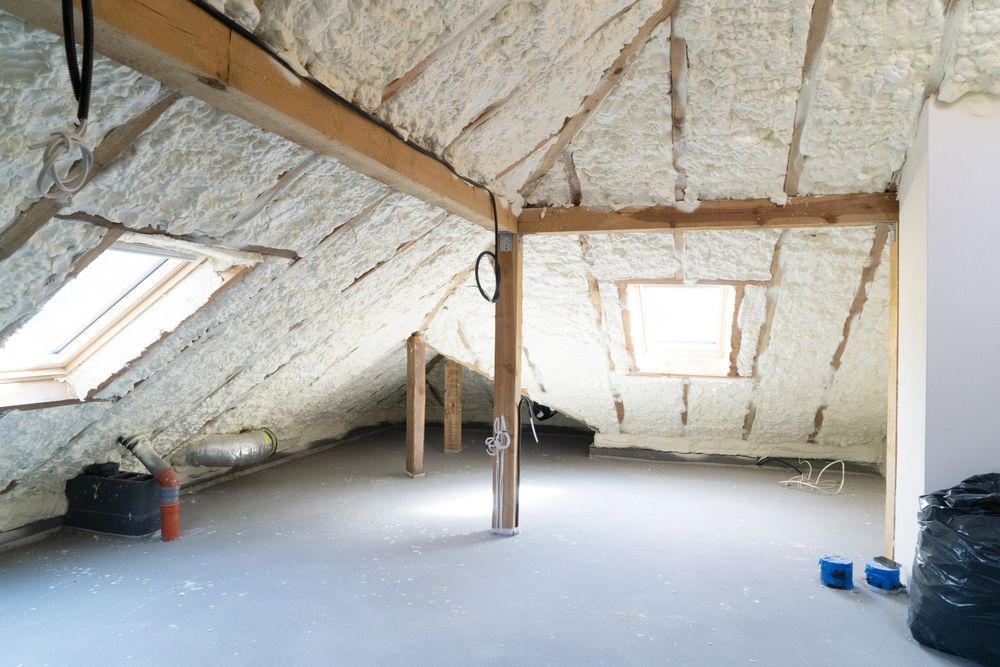
Attic spaces and interior wall cavities in mountain homes require insulation that seals air leaks while allowing seasonal moisture to escape, preventing condensation buildup during temperature swings. Open-cell spray foam expands to fill irregular spaces around roof penetrations and framing irregularities that fiberglass batts cannot cover, while maintaining vapor permeability that lets humidity pass through without trapping it inside assemblies. The foam cures at densities between 0.4 and 0.5 pounds per cubic foot, delivering air sealing with breathability suited to Steamboat area residential and Vail Valley properties. Sprayfoam Solutions LLC applies open-cell foam where cost efficiency and R-value balance matters more than vapor barrier performance.
Installation begins with attic floor or wall cavity preparation, clearing obstructions and verifying ventilation pathways remain open where roof assemblies depend on airflow. Spray technique controls foam thickness to achieve target R-values without overfilling cavities, and cure monitoring ensures full expansion before insulation settles.
Request a detailed estimate based on your attic square footage and target R-value to compare open-cell costs against closed-cell or batt alternatives.
What Proper Open-Cell Application Requires
Open-cell foam must be sprayed in layers to prevent excessive heat buildup during curing, which can cause cell collapse and reduced R-value. Each pass adds thickness while allowing the previous layer to stabilize, so multi-pass application techniques ensure uniform density throughout the cavity. Foam contacts roof sheathing or wall studs and expands to seal gaps around wiring, plumbing, and recessed fixtures that create thermal bypasses in batt insulation installations.
Once cured, you hear less wind noise through wall cavities, experience fewer drafts near light switches and outlets, and notice reduced dust infiltration from exterior sources. Open-cell foam retains R-value through freeze-thaw cycles common in high-altitude climates, maintaining insulation performance without settling or compressing the way fiberglass batts do when exposed to seasonal temperature changes.
The foam does not provide structural reinforcement or serve as a vapor barrier, so attic installations still require ventilation strategies where roof assemblies depend on airflow for moisture management. Fire-rated barriers may be required per local building codes when foam remains exposed in habitable spaces.
Answers to Frequent Service Questions
Homeowners evaluating open-cell foam for attic or wall cavity insulation typically ask about material performance and application methods in mountain climates.
What R-value does open-cell foam achieve per inch?
Open-cell foam delivers approximately R-3.5 to R-4 per inch, requiring thicker applications than closed-cell foam to reach the same total R-value but offering superior air sealing over fiberglass batts.
How does open-cell foam handle moisture in Toponas attics?
The foam's vapor permeability allows seasonal humidity to pass through rather than trapping it against sheathing, preventing condensation that leads to mold growth and wood rot in roof assemblies.
When is open-cell foam a better choice than closed-cell?
Open-cell works best in attics and interior walls where vapor barriers are not required, moisture levels stay moderate, and cost per R-value matters more than maximum insulation per inch of thickness.
What preparation happens before foam spraying?
Attic floors are cleared of stored items, roof leaks are repaired, and ventilation pathways are verified open to ensure foam application does not block soffit or ridge vents where airflow prevents moisture buildup.
How long does open-cell foam take to cure fully?
Full expansion and hardening typically require 24 hours, during which the foam releases residual odors and completes its chemical curing process before drywall or other finish materials are installed.
Sprayfoam Solutions LLC evaluates attic ventilation and roof condition before open-cell application to confirm assemblies can handle breathable insulation without moisture problems. Arrange an on-site consultation to review your attic or wall cavity insulation needs and compare open-cell options against other materials.